

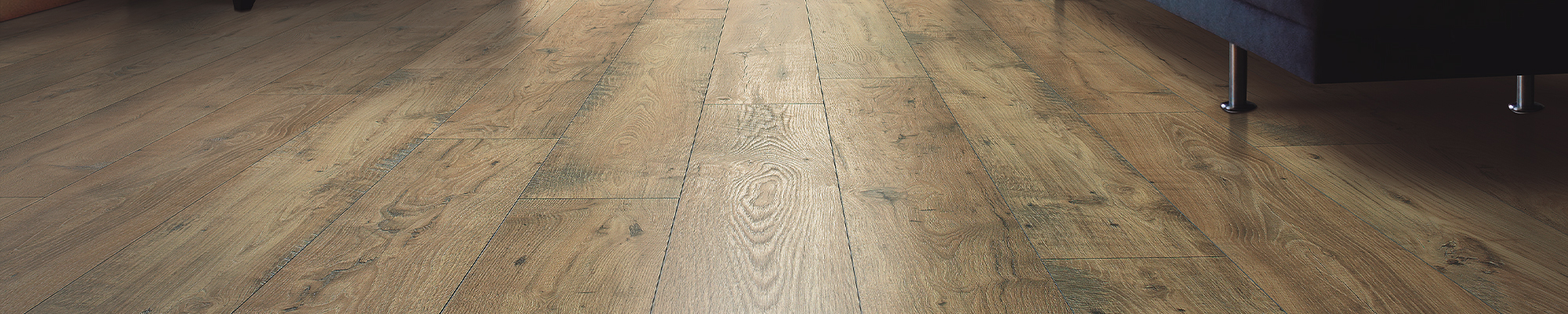
Laminate flooring is built for real life. Footsteps. Pets. Furniture. Spills. Kids running through the hallway. With the right product and proper care, laminate can handle plenty of everyday activity while maintaining the wood-inspired appearance that makes it so popular. But how long can you actually expect laminate floors to last?
There isn't one universal number. Quality laminate flooring can often last 15 to 25 years or longer under suitable conditions, but actual lifespan varies considerably. Product quality, AC rating, thickness, installation, moisture exposure, traffic, maintenance, and even the room where the floor is installed can all influence longevity.
At Mill Carpet in District Heights, MD, we help customers find flooring that balances appearance, durability, and budget. If you're considering laminate wood flooring for your home or business, understanding what affects its lifespan can help you choose wisely and get more from your investment.
How long does laminate flooring typically last?
Many laminate floors can provide roughly 15 to 25 years of service, with some quality products potentially lasting longer when installed correctly and maintained under appropriate conditions.
That range is intentionally broad.
Laminate in a lightly used guest bedroom may experience very little daily wear. Put the same product in a hallway where a family, children, and pets pass through constantly, and it faces a completely different environment.
Quality matters, too.
Entry-level laminate intended for light residential use may not perform like a product designed for heavy residential or commercial traffic. The wear layer, core construction, locking system, AC rating, moisture resistance, and overall manufacturing quality all affect performance.
Installation is another major factor. Poor subfloor preparation, incorrect expansion spacing, moisture problems, or improper installation can shorten the useful life of an otherwise good product.
Rather than choosing laminate based on an estimated lifespan alone, look at how the entire product fits your space.
What is laminate flooring made of?
Understanding laminate construction makes its durability easier to understand.
Laminate is typically built from several layers.
The top wear layer provides a transparent protective surface. It helps resist scratches, stains, fading, and everyday wear.
Underneath is the design layer. This is the high-resolution image responsible for the floor's appearance. Wood look laminate can reproduce oak, maple, hickory, walnut, and many other wood styles without using those species as the surface material.
Next comes the core layer, usually made from high-density fiberboard. This gives the plank structure and supports its locking system.
Finally, the backing layer helps stabilize and balance the plank.
Modern manufacturing has made laminate visuals much more sophisticated. Detailed printing, surface embossing, beveled edges, and varied plank patterns can give laminate wood flooring a convincing natural appearance.
These layers work together. That is why evaluating only one feature, such as thickness, doesn't tell you everything about quality.
Does the AC rating affect laminate flooring lifespan?
It can certainly influence whether the flooring is suitable for the amount of traffic it receives.
Laminate flooring is commonly assigned an Abrasion Criteria, or AC, rating. The scale generally runs from AC1 to AC5 and indicates resistance to wear under standardized testing.
AC1 products are intended for light residential traffic.
AC2 works for moderate residential use.
AC3 is suitable for heavier residential traffic and some light commercial applications.
AC4 is designed for heavier commercial use.
AC5 is intended for demanding commercial environments.
Higher isn't automatically better for every room.
A quiet bedroom doesn't necessarily require the same durability rating as a busy retail environment. The smarter approach is to match the rating with expected use.
Installing a product that isn't designed for the traffic level can lead to premature wear. Conversely, paying extra for commercial-grade performance in a rarely used room may offer little practical benefit.
A knowledgeable laminate flooring store can help you compare ratings based on where the floor will actually be installed.
Does laminate thickness affect durability?
Thickness gets a lot of attention when people shop for laminate.
It matters, but perhaps not in the way shoppers sometimes assume.
Laminate commonly comes in several thicknesses measured in millimeters. A thicker plank can provide a more substantial feeling underfoot and may contribute to a robust locking profile. Depending on the product and installation, it can also help reduce the effect of minor subfloor irregularities.
But thicker doesn't automatically mean more scratch-resistant.
Surface wear is primarily influenced by the wear layer and overall product construction. A thick plank with a poor wear surface isn't necessarily better than a slightly thinner, well-engineered product.
Consider thickness alongside the AC rating, core quality, moisture performance, locking system, warranty, and intended application.
The complete specification matters more than a single number printed on the box.
Can moisture shorten the life of laminate floors?
Yes. Moisture is an important consideration with laminate flooring.
Traditional laminate has a wood-based core that can be damaged by excessive water. If moisture reaches the core and remains there, the planks may swell, warp, or experience edge damage.
Newer products have improved considerably. Some laminate floors are designed with enhanced water resistance, and certain products are marketed as waterproof.
Still, "water-resistant" and "waterproof" should not be treated as interchangeable terms.
Always check the manufacturer's specifications. Look at where the product is approved for installation, how long it is designed to resist surface spills, and what installation requirements must be followed.
Even with waterproof laminate, the flooring itself does not waterproof the room. Water can potentially travel around walls, under trim, or through other openings and reach the subfloor.
Prompt spill cleanup remains a good habit regardless of the product.
Which rooms are best for laminate flooring?
Laminate is remarkably versatile when the right product is selected.
Living rooms are a natural choice. Wood look laminate can provide the warmth of a hardwood-inspired visual while offering straightforward maintenance.
Bedrooms generally experience lighter traffic, allowing you to focus more heavily on color, style, and comfort.
Hallways and family rooms need products designed for heavier residential traffic. Pay close attention to the AC rating and wear performance in these spaces.
Dining rooms are another good candidate, especially for homeowners who want an easy-to-clean surface beneath tables and chairs.
Kitchens may also work with laminate products specifically approved for moisture-prone applications. If you're considering laminate for a kitchen, verify the product's water-performance claims and installation requirements.
Commercial spaces require extra consideration. Choose flooring specifically rated for the expected traffic rather than assuming any residential laminate can handle business use.
How does installation affect laminate flooring lifespan?
Quite a bit.
Laminate flooring installation starts with the surface underneath. The subfloor generally needs to be clean, dry, stable, and sufficiently flat according to manufacturer specifications.
Why does flatness matter?
An uneven surface can allow excessive movement when people walk across the floor. Over time, that movement may place unnecessary stress on the locking joints.
Moisture also needs attention, particularly over concrete. Depending on the product and installation, an appropriate moisture barrier or underlayment may be required.
Many laminate floors use a click-lock system. The planks connect to one another rather than being nailed to the subfloor, creating what is commonly called a floating laminate floor.
Because the floor "floats", appropriate expansion space is usually required around walls and fixed objects. Laminate can respond to changes in temperature and humidity, and that perimeter space allows for movement.
Installing laminate flooring without following these requirements can create problems such as buckling, joint damage, or separation.
Professional laminate floor installation can help ensure the product is installed according to its specific requirements.
Does laminate flooring need to acclimate before installation?
Many products do, but don't assume every laminate requires exactly 24 or 48 hours.
Acclimation requirements vary by manufacturer and product.
The goal is to allow the flooring to reach appropriate conditions relative to the installation environment before it is placed. Manufacturers may specify acceptable room temperature, relative humidity, storage methods, and acclimation times.
Jobsite conditions matter just as much.
Heating or cooling systems may need to be operating normally before installation. Concrete moisture may need to be evaluated. The subfloor should also meet the manufacturer's requirements.
When installing laminate flooring, follow the instructions for the exact product rather than relying on a general rule found online.
How can you make laminate flooring last longer?
Daily habits can have a surprisingly large impact.
Start with dirt.
Sand and grit act like abrasives when trapped beneath shoes or furniture. Sweep, dust mop, or vacuum regularly using a setting appropriate for hard flooring.
Use entry mats to capture dirt before it travels through the home.
Clean spills quickly. Even if your laminate has enhanced water resistance, there is little benefit to leaving standing liquid on the surface.
For deeper cleaning, use a lightly damp mop and a laminate cleaner approved by the manufacturer. Avoid flooding the floor with water.
Be careful with steam mops. High heat and moisture may damage some laminate products or conflict with manufacturer care requirements.
Furniture protection matters, too. Put appropriate pads underneath chair and table legs. Lift heavy furniture instead of dragging it across the floor.
For rolling office chairs, follow the flooring manufacturer's recommendations for protective mats or appropriate casters.
Small choices made every day can prevent unnecessary wear.
Can damaged laminate flooring be refinished?
This is an important difference between laminate and hardwood.
Laminate cannot generally be sanded and refinished like real hardwood because its wood visual is a printed design layer rather than a thick surface of natural wood.
Sanding would remove or damage that decorative layer.
Individual damaged planks may sometimes be replaceable, depending on the flooring, location of the damage, installation method, and availability of matching material.
That is one reason keeping a few extra planks after laminate flooring installation can be useful. If a plank becomes severely damaged years later, having material from the original production run may make matching easier.
Minor surface marks may have other repair options, but always check manufacturer recommendations before using fillers, touch-up products, or repair kits.
When should laminate flooring be replaced?
Age alone isn't the best indicator.
A 20-year-old laminate floor that still looks good and performs properly doesn't need replacement simply because it reached a certain birthday. On the other hand, a much newer floor may need attention if it suffered serious water damage or inappropriate installation.
Signs that replacement may be worth considering include extensive wear through the decorative surface, widespread swelling, damaged joints, persistent separation, major water damage, or numerous damaged planks.
Style can be another reason.
Older laminate designs may look dated even when the floor remains functional. Modern laminate wood flooring offers much more realistic grain, texture, color variation, and plank proportions than many products from decades ago.
Replacing an older floor can therefore be as much about design as performance.
How do you choose a laminate flooring store?
If you're ready to shop, don't focus solely on the color rack.
A good laminate flooring store should help you understand what is underneath the design.
Ask about AC ratings. Compare thicknesses. Discuss moisture performance. Look at locking systems and warranties. Find out which products are intended for your room.
Then look closely at the visuals.
How often does the wood pattern repeat? Does the texture align naturally with the printed grain? Do you prefer narrow boards or wider planks? How much variation is there between individual pieces?
Installation should also be part of the conversation.
Mill Carpet in District Heights, MD, provides flooring products for residential and commercial spaces along with professional installation services. Our team can help customers consider both the flooring itself and what is involved in laminate flooring installation.
Seeing samples in person can also help you judge color and texture more accurately than viewing them on a screen.
Get more life from your laminate flooring
So, what is the lifespan of laminate flooring?
A reasonable expectation for many products is around 15 to 25 years, while some quality laminate floors may last longer under suitable conditions. But there is no expiration date stamped onto your floor.
Traffic matters. Product quality matters. Moisture matters. Maintenance matters. And laminate floor installation matters.
The best way to maximize longevity is to choose a product designed for your space from the beginning. Match the AC rating to your traffic level. Consider water resistance where moisture is likely. Follow acclimation and installation requirements. Then protect the finished floor with sensible everyday care.
At Mill Carpet in District Heights, MD, we help homeowners and businesses explore flooring options suited to different styles, needs, and budgets. Whether you're interested in classic laminate wood flooring, contemporary wood-look laminate, or a durable floating laminate floor for an active space, our team can help you compare the details that matter.
Visit Mill Carpet to explore laminate flooring in person and discuss professional laminate flooring installation. With the right product, proper installation, and regular care, your new laminate floor can remain an attractive part of your space for many years.
